Source Interlocked Rubber Paver for School, Home, and Gym
Compare 30 listings of interlocked rubber paver designed for schools, homes, and commercial clubs. Buyers can evaluate specifications like thickness, material, and certifications to find the right solution for playgrounds, horse barns, or walkways; compare the available evidence and request quotations based on your requirements.
Key considerations
Products List




Comprehensive Sourcing Guide
Interlocked Rubber Paver Sourcing Guide
Buyers evaluating interlocked rubber pavers must first distinguish between general flooring solutions and specialized agricultural or equestrian applications. The observed product range includes specific items like the 100% Recycled Interlocking Horse Barn Rubber Brick, designed for heavy-duty use in horse paths and barns, alongside general outdoor walkway pavers suitable for playgrounds and commercial clubs. Understanding this distinction is critical, as the density and thickness requirements for a horse corridor differ significantly from those needed for a residential garden path.
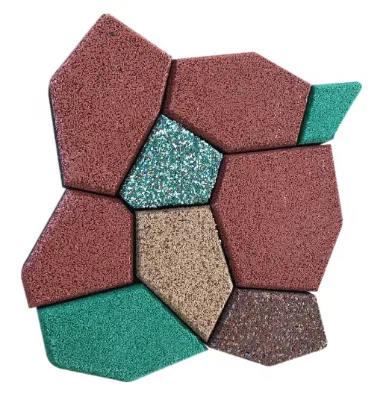
Procurement decisions should also account for the diverse material composition and customization options available in the current market. Most listed products utilize SBR rubber, offering a balance of durability and environmental friendliness, with customization available for specific color needs such as black, red, green, or yellow. Buyers must verify if the supplier can accommodate custom dimensions or branding, as the standard offerings often come in fixed sizes like 200mm x 160mm, while custom orders may require different production timelines and minimum order quantities.
Product Scope and Observed Listing Signals
The market for interlocked rubber pavers presents a wide spectrum of applications, ranging from household and electronic environments to industrial and agricultural settings. High-confidence data indicates that these products are frequently deployed in schools, commercial clubs, and playgrounds, where safety and durability are paramount. The specific mention of horse barns and garden paths suggests a robust product line capable of handling heavy loads and outdoor exposure, making it essential for buyers to match the specific usage environment with the correct product grade.
Listing signals reveal that many suppliers offer flexible installation methods, including DIY options and fixed installation ways, which can significantly impact the total cost of ownership. The availability of samples freely allows buyers to physically assess the texture and interlocking mechanism before committing to large orders. However, the observed price range is vast, spanning from $1.49 to $280,000, indicating that buyers must carefully scrutinize the unit price against the thickness and density specifications to avoid overpaying for standard grades or underestimating the cost of heavy-duty variants.
Technical Specifications to Verify
Thickness and density are the primary technical differentiators that determine the longevity and load-bearing capacity of interlocked rubber pavers. Observed specifications include thicknesses of 25mm, 30mm, 43mm, and 45mm, with some products explicitly marketed as high-density and heavy-duty. Buyers should verify that the selected thickness aligns with the intended traffic load; for instance, a 45mm paver is likely necessary for vehicle or heavy agricultural use, whereas 25mm may suffice for light pedestrian traffic in a garden or indoor setting.
Dimensional consistency and interlocking precision are equally critical for ensuring a stable and safe surface. The standard size of 200mm x 160mm is common, but variations exist, and buyers must confirm that the interlocking mechanism allows for seamless expansion and contraction without gaps. Additionally, the packing method, often on pallets, should be verified to ensure that the pavers arrive without damage or deformation, which could compromise the installation process and the final aesthetic of the paved area.
Compliance and Safety Documentation
Safety certifications are non-negotiable when sourcing interlocked rubber pavers for public or commercial spaces, particularly for playgrounds and schools. The observed product listings frequently cite compliance with CE, ISO, RoHS, and EN1177 standards, which are essential for verifying impact absorption and surface safety. Buyers must request current test reports to confirm that the specific batch of pavers meets these rigorous safety requirements, as these certifications often dictate eligibility for public funding or insurance coverage in various jurisdictions.
Fire resistance and environmental impact are additional compliance factors that require strict verification. Many suppliers list fire resistance certificates and emphasize the eco-friendly nature of their SBR rubber products, which are often made from recycled materials. It is vital to ensure that the "environmentally friendly" claim is backed by specific documentation, such as SGS or TUV test results, rather than generic marketing statements. This due diligence protects the buyer from liability and ensures the product aligns with corporate sustainability goals and local building codes.
Cost Drivers and Commercial Terms
The total cost of interlocked rubber pavers is driven by material density, thickness, and the extent of customization required. While standard sizes like 200mm x 160mm are widely available, custom colors or dimensions may incur higher unit costs and longer lead times. Buyers should analyze the price per square meter against the thickness and density specifications, as a lower price for a thinner paver may result in higher replacement costs over the product's 5-10 year lifespan.
Commercial terms, including payment methods and delivery timelines, play a significant role in the overall procurement strategy. Most suppliers accept T/T or L/C payments and offer delivery within two weeks, which is advantageous for time-sensitive projects. However, the minimum order quantity (MOQ) can vary, with some listings suggesting 100 square meters as a baseline. Buyers must negotiate these terms carefully, especially when dealing with mixed orders or custom designs, to ensure that the financial commitment aligns with the project budget and inventory requirements.
Supplier Qualification and Quality Control
Supplier qualification should focus on their ability to provide consistent quality and reliable after-sales support. The presence of OEM/ODM capabilities and an own brand like Sol Rubber indicates a manufacturer with established production lines and design expertise. Buyers should verify the supplier's history of delivering projects in similar environments, such as horse barns or commercial clubs, to ensure they have the specific experience required for the application.
Quality control processes must be transparent and rigorous to prevent defects in the final product. Buyers should inquire about the supplier's internal testing protocols for density, color consistency, and interlocking strength before shipment. Since the products are often packed on pallets, it is essential to confirm that the packaging protects the pavers during transit. Establishing a clear communication channel for resolving any quality issues post-delivery is also a key indicator of a reliable supplier partnership.
Long-Term Procurement Checks
Long-term procurement success depends on verifying the durability claims and warranty terms associated with the interlocked rubber pavers. The observed data suggests a lifespan of 5-10 years, but this is contingent on proper installation and maintenance. Buyers should request detailed maintenance guidelines and warranty documentation that explicitly covers wear and tear, color fading, and structural integrity under the specific conditions of their intended use.
Regular performance audits and re-evaluation of supplier relationships are necessary to maintain quality standards over time. As the market evolves, new standards or material innovations may emerge, requiring buyers to stay informed about updates to certifications like EN1177 or fire resistance ratings. Establishing a schedule for periodic inspections of the installed pavers can help identify early signs of degradation, allowing for timely interventions that extend the service life of the investment and ensure continued safety for end-users.
FAQs
What certifications do interlocked rubber pavers typically hold?
These pavers commonly hold ISO, CE, RoHS, SGS, TUV, and EN1177 certifications. Some products also feature fire resistance ratings. These documents verify material safety and quality standards for commercial and playground applications, ensuring compliance with international regulations for durable rubber flooring solutions.
Can I customize the color and size of these pavers?
Yes, customization is available for both color and dimensions. Buyers can select from black, red, green, yellow, or gray options. Standard sizes include 200mm by 160mm with thicknesses of 25mm, 30mm, 43mm, or 45mm. OEM and ODM services support specific project requirements.
How long does delivery take for bulk orders?
Delivery typically occurs within two weeks after order confirmation. The loading ports include Qingdao, Shanghai, and Tianjin. This lead time applies to standard production runs. Buyers should confirm specific schedules with suppliers to ensure timely arrival for construction or installation projects requiring quick turnaround.
What is the minimum order quantity for these products?
The minimum order quantity is generally 100 square meters. However, some suppliers may accept orders starting from one unit. This flexibility allows small projects to test samples or purchase smaller batches. Buyers should verify the exact MOQ with the specific manufacturer before placing a purchase order.
Where are these interlocked rubber pavers manufactured?
These products are manufactured in China. Major loading ports for export include Qingdao, Shanghai, and Tianjin. The origin indicates the supply chain location for international shipping. Buyers can expect competitive pricing and established logistics networks from these key Chinese industrial hubs for global distribution.
What materials are used to make these rubber pavers?
The primary material is SBR, often sourced from 100% recycled rubber. This composition ensures environmental friendliness and durability. The high-density construction provides heavy-duty performance for horse barns, gyms, and playgrounds. The recycled content supports sustainable building practices while maintaining structural integrity under heavy use.